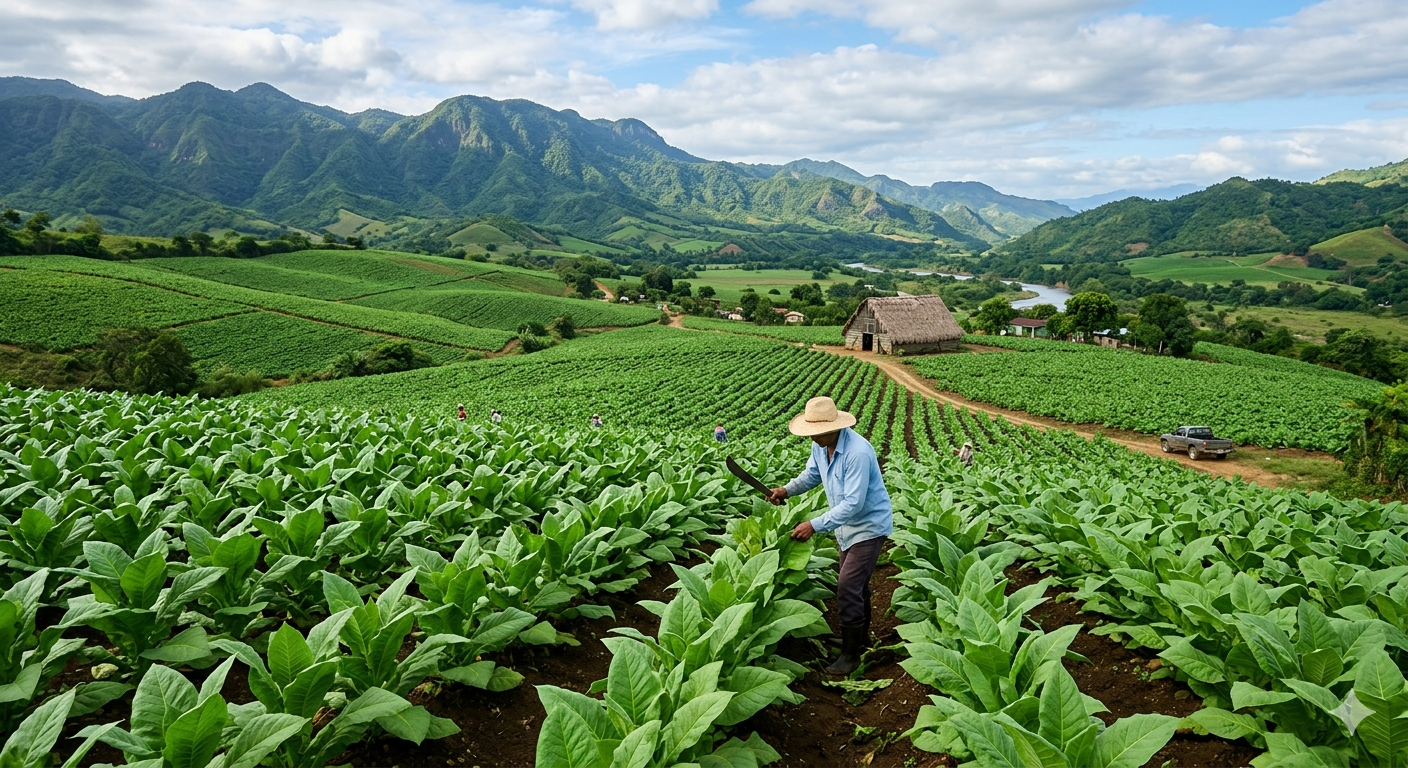

The dominance of the Cibao region in tobacco production was not accidental.
It was the result of specific geographic, agricultural, and economic conditions that made it the most efficient environment for cultivation.

While other regions were limited or excluded, Cibao became the core of Dominican tobacco production.
Understanding this is fundamental.
The key factor: agricultural environment
Tobacco is highly sensitive.
Its quality depends on:
- Soil type
- Humidity levels
- Rainfall patterns
- Drainage
- Temperature
Cibao offered the right balance.
Soil and climate advantage
The region’s soil provides:
- Proper aeration
- Nutrient retention
- Strong root development
Combined with stable climate cycles, this created consistency.
Regions that failed
Agricultural experience defined where tobacco should not be grown:
- Southern region
- Eastern region
- Areas with poor water conditions
These limitations were based on quality outcomes.
Productive concentration
Over time, cultivation concentrated in areas such as:
- Santiago
- La Vega
- Espaillat
Agricultural knowledge
Local producers developed expertise in:
- Seed selection
- Soil management
- Curing techniques
This elevated quality and reputation.
From advantage to dominance
Better production led to:
- Higher output
- Increased exports
- Economic influence
A foundation that still holds
Today, most Dominican tobacco is still grown in Cibao.
Because it works.
Editorial conclusion
Cibao’s dominance is not cultural.
It is technical.